Dog Font: Unleashing Playful Charm for Pet-Centric Branding
You’ve finally perfected the recipe for organic peanut butter dog biscuits. You have a catchy name for your business, a solid business plan, and you’re ready to start selling at the local farmer's market or setting up your online store. But as you sit down to design the label or the header for your website, you hit a snag. Standard serif fonts look too corporate. Clean sans-serif fonts feel too cold. You need something that captures the specific joy of a wagging tail or the comfort of a puppy cuddle, but you don't want it to look like a child’s crayon drawing. This is where the typography choices you make become critical to your brand story. Finding a typeface that balances professionalism with personality is a common challenge for small business owners and designers alike.
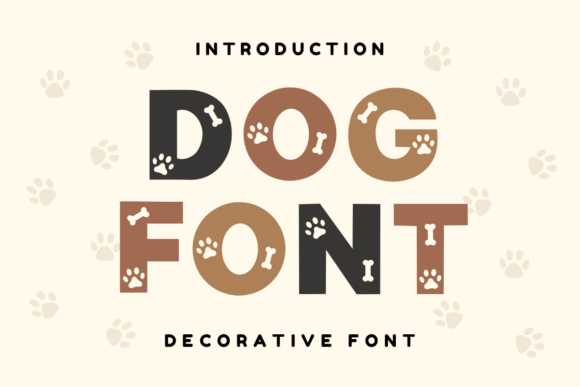
The Dog font is a decorative typeface designed specifically to bridge that gap. It is a fun and playful option inspired by man’s best friend, featuring adorable paw prints and bones integrated directly into the bold letterforms. However, calling it just a "fun" font might undersell its utility. For designers working within the pet industry, children’s entertainment, or even veterinary services, this typeface offers a distinct visual language that communicates warmth and approachability immediately. It isn't just about having a picture of a dog on your poster; it's about infusing the typography itself with the energy of the subject matter.
The Anatomy of a Tail-Wagging Typeface
When we talk about modern typography, we often focus on legibility and grid systems. While those are vital for body copy, display fonts serve a different purpose. Their job is to arrest attention and set a mood in a fraction of a second. The Dog font accomplishes this through its bold construction and thematic detailing. The "bold letterforms" ensure that the text remains visible and impactful, whether it is printed on a small business card or blown up on a large banner for a charity dog walk.
What makes this particular design asset effective is the restraint used in its whimsy. Fonts that lean too heavily into "cute" territory often sacrifice readability. If a customer cannot read your brand name at a glance, the design has failed, no matter how adorable it looks. The integration of paw prints and bones here appears to be stylized rather than literal, allowing the letters to maintain their structural integrity. This makes it a viable option for logo design where clarity is paramount. It functions as a bold display font that retains its charm without becoming a pictographic puzzle.
Practical Applications: From Packaging to Pixels
Understanding where to deploy a creative font like this is half the battle. It is rarely meant for long-form text; you wouldn't write a blog post or a product description entirely in this style because it would tire the reader's eyes. Instead, it shines brightest in high-impact, low-word-count environments.
Consider the realm of packaging design. If you are selling dog treats, toys, or grooming supplies, the shelf presence is everything. Using the Dog font for the product name on the box creates an instant connection with the shopper. It signals that the product is friendly and approachable before they even read the ingredients list. Similarly, for social media graphics, where users are scrolling rapidly, a bold, thematic header created with this font can stop the scroll. It works exceptionally well for Instagram stories, Facebook event headers for adoption days, or YouTube thumbnails for pet vloggers.
Beyond the digital space, the font has significant utility in print materials. Think about invitations for a "Puppy Shower," flyers for a lost pet, or signage for a dog-friendly park. In these contexts, the typography needs to do more than convey information; it needs to convey emotion. The playful nature of the font sets the expectation of a fun, lighthearted event. It is also a strong contender for merchandise. T-shirts, tote bags, and mugs sold by pet charities or dog walking services often rely on bold, thematic typography to make the item desirable.
Strategic Branding and Visual Consistency
For entrepreneurs and brand strategists, the decision to use a thematic font is a strategic one. A typeface is a cornerstone of brand identity. When you choose the Dog font, you are making a statement about your brand's voice. You are saying, "We are approachable, we love animals, and we don't take ourselves too seriously." This is invaluable for businesses trying to build a community rather than just a customer base.
However, achieving visual consistency requires more than just picking a nice font. You must consider how this decorative typeface interacts with the rest of your design assets. A common mistake is pairing a highly stylized font with another distinct font, resulting in a chaotic layout. Because the Dog font has a strong personality, it pairs best with neutral companions. A simple sans-serif font for your body copy (like Open Sans or Lato) allows the headlines to pop without overwhelming the viewer. This balance ensures your marketing assets look professional rather than cluttered.
Furthermore, using this font across various touchpoints—your website headers, your email newsletter banners, and your physical signage—reinforces brand recognition. When a customer sees that specific style of lettering, they should immediately associate it with your business. It becomes a visual shorthand for the quality and personality of your service.
Technical Considerations for Designers
While the aesthetic is crucial, practical application requires a look under the hood. When integrating a new typeface into your workflow, you need to consider the technical environment. For web design, file size and load times matter. While display fonts are generally used sparingly (meaning fewer characters are loaded), ensuring the font file is optimized is key to a smooth user experience.
Readability considerations also extend to color contrast and sizing. Because this is a bold font, it holds up well against complex backgrounds, such as photos of dogs in a park. However, intricate details in the letters can get lost if the font size is reduced too drastically. It is advisable to test the font at various sizes to find the "readability threshold"—the point where the decorative elements start to blur together. Generally, keeping this typeface above 24pt for print and 20px for digital ensures the paw prints and bone motifs remain distinct.
Additionally, always review the character set of the font you purchase. Does it include punctuation marks? Does it support multiple languages if you have an international audience? Checking these details beforehand prevents headaches during the final stages of a design project.
Legal and Licensing Essentials
For small business owners and content creators, the legal side of design assets is often the most confusing. It is vital to distinguish between free-for-personal-use fonts and commercial font licenses. If you are using the Dog font for a client project, for merchandise you sell, or for your own business branding, you generally need a commercial license.
Ignoring this step can lead to legal complications down the road. Reputable font foundries and marketplaces are clear about their licensing terms. Some licenses are based on the number of users (seats), while others are based on the number of impressions (views) for web usage. Before finalizing a design for a large-scale marketing campaign, double-check that your license covers the scope of that usage. This due diligence is part of maintaining a professional presentation and protecting your business interests.
Pairing and Final Polish
To get the most out of the Dog font, think of it as the main actor in a play, supported by a cast of reliable extras. As mentioned, a clean sans-serif works well, but a handwritten font could also complement it for a more organic, rustic feel—perfect for a farm-to-bowl pet food brand. The key is contrast. If the display font is bold and decorative, the supporting text should be light and simple.
Ultimately, typography is about communication. The Dog font communicates joy, energy, and a love for pets. By using it thoughtfully in your logos, packaging, and digital content, you create an immediate emotional bridge with your audience. It’s not just about making things look pretty; it’s about choosing the right tools to tell your specific story. Whether you are designing a flyer for a local shelter or branding a luxury pet spa, the right creative font choice ensures your message is not only seen but felt.